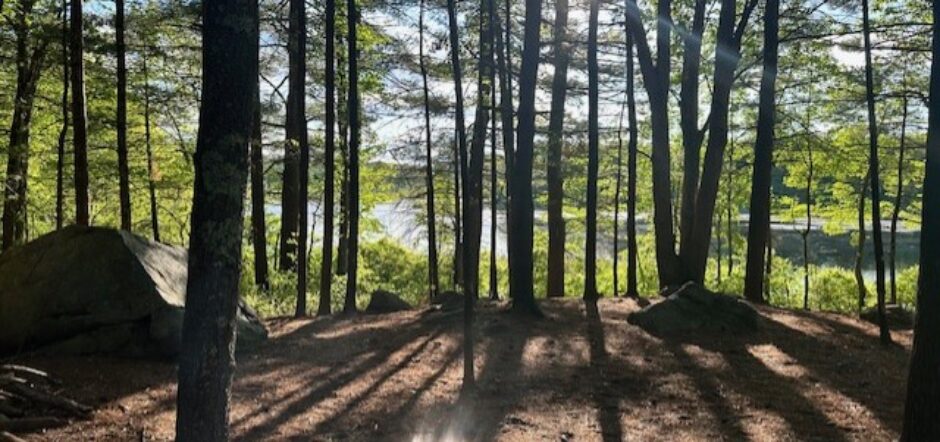

The Healing Power of Nature: Why Your Body, Mind, and Soul Crave Those Forest Walks
There’s something magical about that moment when you step off the concrete and onto a dirt trail. Your shoulders drop, your breathing deepens, and suddenly, that mental fog that’s been following you around all week starts to lift. Sound familiar?
Last Tuesday, I found myself staring at my computer screen for the tenth consecutive hour, trying to solve a problem that seemed impossible. My neck ached, my eyes burned, and my brain felt like it was running on fumes. Then I remembered something my friend, Julia, used to say: “When life gets too heavy, take it to the trees.” So I closed my laptop, laced up my sneakers, and headed to the nearest trail.
Forty-five minutes later, walking among towering maples and oaks and listening to the gentle babble of a creek, the solution to my problem appeared as clearly as if someone had written it in the clouds above. This isn’t coincidence—it’s science. And it’s one of countless reasons why spending time in nature isn’t just nice to have; it’s essential for our wellbeing. We need more time in nature.
The Physical Renaissance: How Nature Rewrites Your Health Story
Your Heart’s Love Affair with Green Spaces
When we talk about cardiovascular health, we usually think about gym memberships and kale smoothies. But here’s what most people don’t realize: a simple walk through the park can be as transformative for your heart as any expensive fitness program!
Research consistently shows that spending time in nature significantly reduces blood pressure and heart rate. But the real magic happens when this becomes a regular practice. I remember when my friend Sarah, a high-powered account executive in Boston who lived on coffee and stress, discovered forest bathing—the Japanese practice of mindfully immersing oneself in nature—during a particularly overwhelming period in her career. Within three months of weekly forest walks, her doctor was amazed to find her blood pressure had dropped from stage 2 hypertension to completely normal ranges. Her regular chest pains completely disappeared.
The secret lies in what happens to our nervous system when we’re surrounded by green. The parasympathetic nervous system—our body’s “rest and digest” mode—kicks into gear, naturally slowing our heart rate and allowing our cardiovascular system to reset and repair.
The Immune System Upgrade You Never Knew You Needed
Here’s where things get really fascinating. Trees and plants release organic compounds called phytoncides, which are essentially nature’s aromatherapy. When we breathe in these compounds during outdoor activities, something remarkable happens: our bodies produce more natural killer (NK) cells—the white blood cells that fight off infections and even cancer cells.
A study in Japan found that people who spent three days forest bathing showed a 50% increase in NK cell activity, and this boost lasted for up to 30 days after their nature retreat. Imagine if there was a supplement that could do that—it would cost hundreds of dollars. But nature provides it for free, every single day.
I learned this firsthand during a winter when everyone around me was getting sick, but despite working long hours and dealing with family stress, I remained healthy. The only difference? I had started taking daily walks in either a nearby Audubon wildlife sanctuary or on the SNETT rail trail, even when it was cold and gray outside. Those fifteen-minute nature breaks weren’t just mental health maintenance—they were giving my immune system a daily upgrade.
The Metabolism Reset That Happens Without Counting Calories
Physical activity in nature seems to work differently than indoor exercise. There’s something about the varied terrain, the fresh air, and the natural resistance of hiking trails that engages our bodies in a more complete way. But beyond the obvious calorie burn, nature exposure helps regulate our circadian rhythms, which directly impacts metabolism and weight management.
Morning walks in natural light help synchronize our internal clocks, leading to better sleep, more balanced hormone production, and improved metabolic function. My neighbor Jim, who had struggled with weight and energy issues for years, started taking his coffee to the park each morning instead of drinking it while scrolling his phone. Six months later, he’d lost thirty pounds without changing his diet or starting a formal exercise program. “I just started feeling more energetic during the day and sleeping better at night,” he told me. “Everything else followed naturally.”
The Mental Health Revolution: Nature as Medicine
The Anxiety Antidote Growing in Your Backyard
If there’s one thing our modern world excels at producing, it’s anxiety. Between constant connectivity, information overload, and the pressure to optimize every moment of our lives, many of us exist in a state of chronic stress that would have been unimaginable to our ancestors.
Nature offers something our indoor environments can’t: true sensory richness without overstimulation. When we’re in natural settings, our attention is captured by what researchers call “soft fascination”—the gentle, effortless focus we give to watching clouds drift by or listening to bird songs. This type of attention allows our directed attention to rest and restore.
I once worked with a client, Maria, who experienced such severe anxiety that she couldn’t sit through a movie without having a panic attack. We started with five-minute sits on a bench in her neighborhood park. The first few times, she couldn’t stop checking her phone or thinking about her to-do list. But gradually, she began to notice the texture of tree bark, the pattern of leaves against the sky, the way shadows moved throughout the day. These small moments of nature connection became anchors of calm in her otherwise chaotic mental landscape. Six months later, she completed her first solo camping trip—something she never would have imagined possible.
Depression’s Natural Nemesis
Depression often creates a vicious cycle: we feel low, so we isolate ourselves indoors, which makes us feel worse, so we retreat further. Nature breaks this cycle in multiple ways.
First, there’s the simple but profound impact of sunlight on our mood. Natural light exposure increases serotonin production and helps regulate melatonin, both crucial for emotional wellbeing. But it goes deeper than biochemistry. Nature provides what psychologists call “positive distraction”—engaging our senses in ways that interrupt rumination and negative thought patterns.
There’s also something powerfully healing about witnessing natural cycles. In nature, we see that dormancy leads to growth, that storms pass, that seasons change. These aren’t just pretty metaphors—they’re lived experiences that can help us understand our own emotional cycles differently.
The Creativity Catalyst You’ve Been Missing
Some of history’s greatest thinkers—from Darwin to Einstein to Thoreau—credited their most important insights to time spent in nature. Modern neuroscience is beginning to understand why.
When we’re in natural environments, our brains shift into what researchers call the default mode network—a state associated with creative insight and self-reflection. Without the constant input of urban environments, our minds are free to make new connections, to see problems from fresh angles.
I keep a small notebook in my hiking pack, not because I plan to write, but because inevitably, about twenty minutes into any nature walk, ideas start flowing. Solutions to work challenges, insights about relationships, creative projects I’d been stuck on—they all seem to resolve themselves when my mind is allowed to wander alongside a meandering trail.
The Spiritual Dimension: Finding Something Larger Than Ourselves
The Awe Factor That Transforms Perspective
There’s a reason why virtually every spiritual tradition includes practices that connect us with the natural world. Nature has an unparalleled ability to evoke awe—that transcendent feeling we get when we encounter something vast and beautiful that momentarily shrinks our everyday concerns.
Awe has measurable effects on our wellbeing. It reduces inflammation, increases feelings of connection to others, and helps us feel part of something larger than ourselves. You don’t need to climb Everest to experience this. I’ve felt profound awe watching fog roll through valley trees during a morning walk, observing a hawk circle overhead, or simply noticing how light filters through leaves in ways that seem almost impossibly beautiful.
The Practice of Presence
In our hyperconnected world, true presence has become a rare and precious commodity. Nature naturally draws us into the present moment. The rustling of leaves, the feel of wind on our skin, the intricate patterns of moss on a rock—these experiences anchor us in the here and now in ways that meditation apps and mindfulness courses try to replicate.
But in nature, presence doesn’t feel forced or contrived. It arises naturally when we allow ourselves to be fully where we are. I remember a particularly stressful period when I was caring for my aging father-in-law while managing work deadlines and family responsibilities. During those weeks, my daily walks became sacred time—not because I was doing anything particularly spiritual, but because for thirty minutes, I could simply be present with the turning of the season, the reliability of familiar trees, the small daily changes that reminded me that life moves in rhythms larger than my immediate concerns.
Connection to Something Timeless
In nature, we encounter timeframes that dwarf our human concerns. The oak tree in my neighborhood park was already mature when my grandparents were young. The stones in the creek have been smoothed by water for thousands of years. This perspective doesn’t diminish the importance of our human lives—it contextualizes them within a larger story of existence that can be profoundly comforting.
Making Nature Part of Your Daily Practice
Starting Small, Thinking Big
You don’t need to become a weekend warrior or invest in expensive outdoor gear to start experiencing these benefits. Some of the most profound nature experiences happen in the smallest moments: feeling grass beneath bare feet, watching clouds change shape during a lunch break, or simply stepping outside to take three deep breaths of fresh air.
Start where you are, with what you have. If you live in an urban area, seek out pocket parks, tree-lined streets, or even window boxes filled with growing things. If you have access to larger green spaces, consider making them a regular destination rather than a special occasion treat.
The Compound Effect of Consistency
Like any practice that transforms our wellbeing, the benefits of nature connection compound over time. That first walk might leave you feeling slightly more relaxed. The tenth walk might help you sleep better. The hundredth walk might fundamentally change how you relate to stress and challenge.
The key is consistency rather than intensity. A daily fifteen-minute walk in your neighborhood can be more transformative than monthly epic hikes if it becomes a true habit. Nature doesn’t judge the length of your visits—it simply offers its benefits to anyone willing to show up and receive them.
The Path Forward
As I write this, I can see trees through my window—the same oaks that have taught me about resilience, the maples that demonstrate the beauty of seasonal change, the evergreens that model constancy through difficulty. They’re not just scenery; they’re teachers, healers, and companions on the journey of being human.
We live in an age of remarkable technological advancement, but we’re also experiencing unprecedented rates of anxiety, depression, and chronic disease. Perhaps the solution isn’t more sophisticated—perhaps it’s simpler. Perhaps what we need isn’t the next app or gadget, but the oldest therapy available: time spent in the natural world that made us.
Your body knows this. Your mind craves this. Your soul remembers this. The only question is: when will you answer the call of the wild that lives not in some distant wilderness, but in every tree, every patch of grass, every moment of sky visible from where you sit right now?
The path to the trailhead begins with a single step outside your door. Your wellbeing—physical, mental, and spiritual—is waiting for you there.
Posted in Boston, Uncategorized
Tagged #cancerfighting, #forestbathing, #healing, #HealingInNature, #healingpowerofnature, #Massachusettswalkingtrails, #massaudubon, #Nature, #natureandmentalhealth, #naturepreserves, #naturewalk, #naturewalks, #peace, #presence, #railtrain, #relax, #SNETT, #stressfree, #waldenpond, #walkinginnature, Health, Joy, Walking, wellbeing
Leave a comment
Walking Through Wonder: A Journey into New Hampshire’s Flume Gorge
Tucked away in the heart of New Hampshire’s White Mountains, Flume Gorge stands as one of nature’s most spectacular architectural marvels. This natural chasm, carved by millennia of rushing water and geological forces, offers visitors a breathtaking journey through towering granite walls, cascading waterfalls, and ancient forest paths that seem to transport you into another world entirely.
A Gorge Born from Ancient Forces
The story of Flume Gorge begins nearly 200 million years ago, when geological upheavals and the relentless power of Conway granite created the foundation for what would become this natural wonder. The gorge itself stretches 800 feet long, with granite wall s soaring up to 90 feet high and narrowing to just 12 feet apart in some sections. As you walk through this natural corridor, you’re literally stepping through geological time, witnessing the incredible forces that shaped the White Mountains.
The Flume Brook, fed by mountain springs and seasonal snowmelt, continues the work begun eons ago. Its crystal-clear waters have polished the granite walls to a smooth, almost marble-like finish, creating a natural gallery that changes with every shift of light and shadow throughout the day.
The Trail Experience: More Than Just a Walk
The Flume Gorge experience begins at the visitor center, where you’ll embark on a 2-mile loop trail that’s both accessible and awe-inspiring. The journey starts with a gentle walk through northern hardwood forest, where sugar maples, yellow birches, and American beeches create a canopy that filters sunlight into dancing patterns on the forest floor.
As you approach the gorge entrance, the temperature drops noticeably – a natural air conditioning system created by the cool granite walls and rushing water. The wooden boardwalk system, carefully designed to protect both visitors and the delicate ecosystem, guides you through the heart of the gorge while providing stunning vantage points for photography and contemplation.
The highlight of many visitors’ journey is Avalanche Falls, a 45-foot cascade that thunders down into the gorge with mesmerizing power. The mist from the falls creates its own microclimate, supporting unique plant communities including rare ferns and mosses that thrive in the constant humidity.

Seasonal Splendor: A Year-Round Destination
Each season transforms Flume Gorge into a completely different experience. Spring brings rushing waters swollen with snowmelt, creating dramatic cascades and filling the gorge with the sound of surging rapids. The emerging wildflowers – trilliums, lady slippers, and wood sorrel – add delicate splashes of color to the forest floor.
Summer offers the most comfortable hiking conditions, with lush green foliage creating natural shade and the cool gorge providing relief from warm days. This is prime time for photographers seeking to capture the interplay of light, water, and stone.
Fall, however, might be the gorge’s most spectacular season. The surrounding hardwood forest erupts in brilliant oranges, reds, and yellows, creating a stunning contrast with the grey granite walls. The reflection of autumn leaves in the dark pools scattered throughout the gorge creates mirror-like images that seem almost too beautiful to be real.
Winter transforms the gorge into a crystalline wonderland, though access is limited. Ice formations cling to the granite walls, and the falls often freeze into dramatic sculptural forms that attract ice climbers and winter photography enthusiasts.
Beyond the Gorge: Exploring Franconia Notch
Flume Gorge sits within Franconia Notch State Park, a 6,692-acre preserve that offers countless additional adventures. The park is home to the famous Cannon Mountain Aerial Tramway, which provides breathtaking views of the White Mountains from 4,080 feet above sea level. The nearby Echo Lake offers swimming and picnicking opportunities, while the Franconia Ridge Trail attracts serious hikers seeking to conquer some of New Hampshire’s most challenging peaks.
The park also preserves the site of the former Old Man of the Mountain, New Hampshire’s beloved state symbol that graced the mountainside for thousands of years before naturally collapsing in 2003. While the formation is gone, its legacy lives on in the visitor center and throughout New Hampshire’s cultural identity.
Planning Your Visit: Practical Tips for the Perfect Experience
Flume Gorge is open seasonally, typically from mid-May through mid-October, with the exact dates varying based on weather conditions and trail maintenance needs. The visitor center opens at 9 AM, and while the gorge rarely feels crowded due to the natural flow of the trail system, early morning visits offer the most serene experience and the best lighting for photography.
Admission includes access to the entire trail system as well as the informative exhibits at the visitor center, which provide excellent context about the geological and natural history of the region. The trail is suitable for most fitness levels, though the boardwalk system includes stairs and some moderate elevation changes.
Comfortable walking shoes with good grip are essential, as the wooden boardwalks can become slippery when wet. Bringing a light jacket is advisable even on warm days, as the temperature inside the gorge can be 10-15 degrees cooler than the surrounding forest.
A Living Laboratory of Natural Wonder
What makes Flume Gorge truly special isn’t just its dramatic beauty, but its role as a living example of geological processes still at work. Every spring freshet continues to shape the granite walls, every storm brings subtle changes to the landscape, and every season demonstrates the incredible adaptability of life in this unique environment.
The gorge serves as home to a remarkable diversity of wildlife, from the brook trout that navigate its waters to the barred owls that call from the surrounding forest. Sharp-eyed visitors might spot red squirrels gathering nuts, or catch a glimpse of a white-tailed deer picking its way carefully along the forest trails.
For families, Flume Gorge offers an perfect introduction to New Hampshire’s natural heritage – dramatic enough to inspire wonder, accessible enough for children, and educational enough to spark curiosity about the natural processes that continue to shape our world.
Standing within the granite walls of Flume Gorge, surrounded by the sound of rushing water and towering trees, you can’t help but feel connected to something much larger and older than yourself. It’s a reminder that some of the most profound experiences in life come not from human creation, but from taking the time to truly observe and appreciate the incredible artistry of the natural world.
Whether you’re a serious hiker, a casual nature lover, or simply someone seeking a moment of peace and wonder, Flume Gorge delivers an unforgettable experience that will leave you planning your return visit before you’ve even reached the end of the trail.
Posted in Health, New England, Walking
Tagged #FamilyFun, #FamilyHike, #FlumeGorge, #FranconiaNotch, #healing, #HealingInNature, #NaturalBeauty, #Nature, #naturephotography, #naturewalk, #NewHampshire, #peace, #wonder, hiking
Leave a comment
Eastern Massachusetts Walking Wonderlands: 9 Joy-Filled Nature Escapes Near Boston
Looking to reconnect with nature, recharge your spirit, and explore the scenic beauty of Eastern Massachusetts? Whether you’re seeking peaceful forest trails, skyline views, or coastal serenity, this curated guide of top walking trails delivers joy at every step.
From wildlife sanctuaries and state parks to oceanfront gems, each destination includes trail highlights, “Joy Drop” moments, and insider trail picks to help you experience the full magic of outdoor walking.
🌿 1. Broadmoor Wildlife Sanctuary – Natick, MA
Visit Broadmoor – Mass Audubon
Broadmoor spans 624 acres of marsh, forest, and riverfront in the heart of MetroWest. With 9 miles of trails, it’s a sanctu
ary for birdwatchers and peace-seekers alike.
-
Vibrant Vibe: Marsh boardwalks, turtle sightings, and red-winged blackbirds chorusing near the Charles River.
-
Joy Drop: Pause on a bench overlooking the pond as a heron fishes in silence—it feels sacred.
-
Trail Pick: Indian Brook & Glacial Hill Loop (~3 miles) – Great mix of forest and field with some rolling hills.
🏞️ 2. Middlesex Fells Reservation – Stoneham/Medford/Melrose
Just north of Boston, this massive reservation boasts 100+ miles of trails, granite outcrops, and several hidden towers.
-
Vibrant Vibe: Breathtaking city views, rocky climbs, and serene ponds tucked in a New England forest.
-
Joy Drop: Climb Boojum Rock or Wright’s Tower and gaze out over Boston’s skyline—nature meets city in perfect balance.
-
Trail Pick: Rock Circuit Trail (~2.9 miles) for adventure; Skyline Trail for seasoned hikers and unforgettable views.
🌲 3. Noanet Woodlands – Dover, MA
Visit Noanet Woodlands – The Trustees
This 595-acre wooded retreat features quiet trails through pine and hardwood forest, and the rewarding Noanet Peak overlook.
-
Vibrant Vibe: Mossy stone walls, babbling brooks, and panoramic skyline views from the summit.
-
Joy Drop: Arrive at the peak at sunrise and watch light burst over Boston.
-
Trail Pick: Noanet Peak + Peabody Loop (3–4 miles) – Peaceful with moderate elevation gain.
🐦 4. Ipswich River Wildlife Sanctuary – Topsfield, MA
Explore Ipswich River – Mass Audubon
One of the most diverse sanctuaries in the state, with 12 miles of trails, canoe rentals, glacial formations, and wildlife galore.
-
Vibrant Vibe: Fern-filled forest floors, wild turkeys, ancient eskers, and peaceful riverbanks.
-
Joy Drop: Rest on the South Esker bench—birdsong floats by with the inscription “It’s the joy in your heart.”
-
Trail Pick: Rockery Trail – A fairytale-like trail with giant boulders and rhododendron tunnels.
🐢 5. Stony Brook Wildlife Sanctuary – Norfolk, MA
Discover Stony Brook – Mass Audubon
Ideal for families and those seeking accessibility, this serene sanctuary features boardwalks over wetlands and gentle loops.
-
Vibrant Vibe: Lily pads, cattails, turtles basking in the sun, and the soothing sound of a hidden waterfall.
-
Joy Drop: On the boardwalk, share a gaze with a turtle in morning light—pure presence.
-
Trail Pick: 1-mile full loop with sensory stops and waterfall overlook.

Peaking at a waterfall at Stony Brook
⛰️ 6. Blue Hills Reservation – Quincy/Milton/Braintree
With 7,000+ acres and over 125 miles of trails, Blue Hills is a hiker’s paradise just minutes from downtown Boston.
-
Vibrant Vibe: Sweeping views, granite cliffs, wooded ravines, and wildlife galore.
-
Joy Drop: Reach Hancock Hill’s tower—clouds drift below and the harbor stretches endlessly.
-
Trail Pick: Great Blue Hill Loop (~3 miles, 635 ft elevation) – A shorter challenge with high rewards.
🌊 7. World’s End – Hingham, MA
Explore World’s End – The Trustees
A dreamy peninsula park with miles of carriage paths, ocean breezes, and 360° views of Boston Harbor and the city skyline.
-
Vibrant Vibe: Rolling meadows, rocky overlooks, and century-old trees arching over crushed stone paths.
-
Joy Drop: Watch the sun set over the harbor as boats drift by—soul soaked in gold.
-
Trail Pick: Main Loop (~3.8 miles) – Flat, accessible, and magical for families or solo wanderers.
📚 8. Walden Pond State Reservation – Concord, MA
Step into literary history where Henry David Thoreau found solace and simplicity. The 1.9-mile trail around the pond is short, sweet, and reflective.
-
Vibrant Vibe: Crystal waters, tree reflections, peaceful beaches, and echoes of philosophical musings.
-
Joy Drop: Sit by the replica cabin, let your mind wander with Thoreau.
-
Trail Pick: Walden Pond Loop (~1.9 miles) – Perfect for contemplative walking.
🌳 9. Lynn Woods Reservation – Lynn, MA
Learn About Lynn Woods – City of Lynn
Spanning over 2,200 acres, this is the second-largest municipal forest in the U.S. Expect winding paths, forest reservoirs, and historic towers.
-
Vibrant Vibe: Deep woods, still waters, and expansive views from Mount Gilead’s stone tower.
-
Joy Drop: Stand atop Stone Tower and breathe in 360° views—forest meets ocean, earth meets sky.
-
Trail Pick: 4–5 mile loop including Breeds Pond, Mount Gilead, and Stone Tower.
Posted in Boston, Health, Joy, New England, Walking
Tagged #calm, #environmentallove, #findjoyinwalking, #findyourjoy, #Massachusettswalkingtrails, #massaudubon, #Nature, #natureandmentalhealth, #naturepreserves, #thingstodoinmassachusetts, #walkinginnature, Boston, hiking, Joy, wellbeing
Leave a comment
Joy, Joy, Joy
What did you do that brought you joy? If you are like some of us, we get so busy that we forget to have fun and enjoy life. I’d like to challenge you to write a list of things that bring you joy and try to make sure you incorporate at least one of those into your day. Some of the bigger things that bring me joy are Disney and vacations in general.
Posted in Uncategorized
Leave a comment
Let’s Get Joyful!!
I have wanted to get started on writing a blog for years but often hesitated because I wanted to find the perfect topic. Joy is the perfect topic. There are lots of things that bring me joy and some of those may also bring you joy. We will talk about those and how everyone can find their own joy and focus on it to bring more joy!
Did you know that your mental attitude, happiness, and outlook affect your health? We can literally help ourselves be healthier by changing our thoughts and what we put our attention on!
Life is meant to be enjoyed! Time to embark on the best days of our lives!! I am changing my life for the better starting today! Join me!