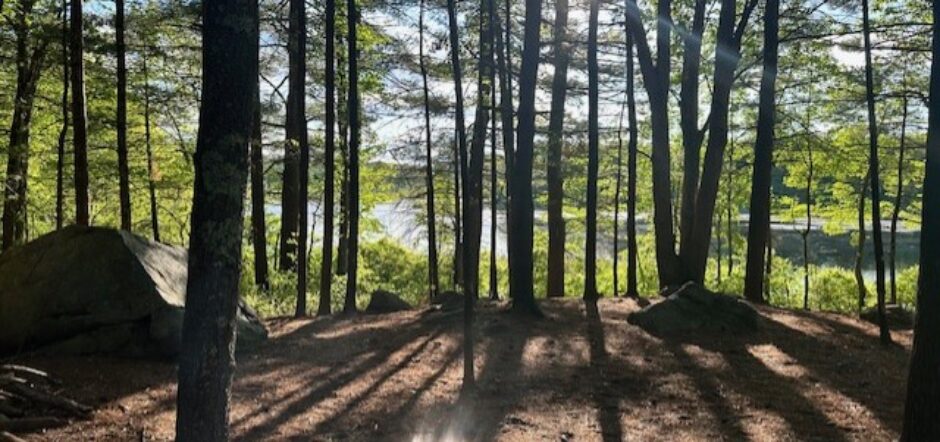
There’s something magical about that moment when you step off the concrete and onto a dirt trail. Your shoulders drop, your breathing deepens, and suddenly, that mental fog that’s been following you around all week starts to lift. Sound familiar?
Last Tuesday, I found myself staring at my computer screen for the tenth consecutive hour, trying to solve a problem that seemed impossible. My neck ached, my eyes burned, and my brain felt like it was running on fumes. Then I remembered something my friend, Julia, used to say: “When life gets too heavy, take it to the trees.” So I closed my laptop, laced up my sneakers, and headed to the nearest trail.
Forty-five minutes later, walking among towering maples and oaks and listening to the gentle babble of a creek, the solution to my problem appeared as clearly as if someone had written it in the clouds above. This isn’t coincidence—it’s science. And it’s one of countless reasons why spending time in nature isn’t just nice to have; it’s essential for our wellbeing. We need more time in nature.
The Physical Renaissance: How Nature Rewrites Your Health Story
Your Heart’s Love Affair with Green Spaces
When we talk about cardiovascular health, we usually think about gym memberships and kale smoothies. But here’s what most people don’t realize: a simple walk through the park can be as transformative for your heart as any expensive fitness program!
Research consistently shows that spending time in nature significantly reduces blood pressure and heart rate. But the real magic happens when this becomes a regular practice. I remember when my friend Sarah, a high-powered account executive in Boston who lived on coffee and stress, discovered forest bathing—the Japanese practice of mindfully immersing oneself in nature—during a particularly overwhelming period in her career. Within three months of weekly forest walks, her doctor was amazed to find her blood pressure had dropped from stage 2 hypertension to completely normal ranges. Her regular chest pains completely disappeared.
The secret lies in what happens to our nervous system when we’re surrounded by green. The parasympathetic nervous system—our body’s “rest and digest” mode—kicks into gear, naturally slowing our heart rate and allowing our cardiovascular system to reset and repair.
The Immune System Upgrade You Never Knew You Needed
Here’s where things get really fascinating. Trees and plants release organic compounds called phytoncides, which are essentially nature’s aromatherapy. When we breathe in these compounds during outdoor activities, something remarkable happens: our bodies produce more natural killer (NK) cells—the white blood cells that fight off infections and even cancer cells.
A study in Japan found that people who spent three days forest bathing showed a 50% increase in NK cell activity, and this boost lasted for up to 30 days after their nature retreat. Imagine if there was a supplement that could do that—it would cost hundreds of dollars. But nature provides it for free, every single day.
I learned this firsthand during a winter when everyone around me was getting sick, but despite working long hours and dealing with family stress, I remained healthy. The only difference? I had started taking daily walks in either a nearby Audubon wildlife sanctuary or on the SNETT rail trail, even when it was cold and gray outside. Those fifteen-minute nature breaks weren’t just mental health maintenance—they were giving my immune system a daily upgrade.
The Metabolism Reset That Happens Without Counting Calories
Physical activity in nature seems to work differently than indoor exercise. There’s something about the varied terrain, the fresh air, and the natural resistance of hiking trails that engages our bodies in a more complete way. But beyond the obvious calorie burn, nature exposure helps regulate our circadian rhythms, which directly impacts metabolism and weight management.
Morning walks in natural light help synchronize our internal clocks, leading to better sleep, more balanced hormone production, and improved metabolic function. My neighbor Jim, who had struggled with weight and energy issues for years, started taking his coffee to the park each morning instead of drinking it while scrolling his phone. Six months later, he’d lost thirty pounds without changing his diet or starting a formal exercise program. “I just started feeling more energetic during the day and sleeping better at night,” he told me. “Everything else followed naturally.”
The Mental Health Revolution: Nature as Medicine
The Anxiety Antidote Growing in Your Backyard
If there’s one thing our modern world excels at producing, it’s anxiety. Between constant connectivity, information overload, and the pressure to optimize every moment of our lives, many of us exist in a state of chronic stress that would have been unimaginable to our ancestors.
Nature offers something our indoor environments can’t: true sensory richness without overstimulation. When we’re in natural settings, our attention is captured by what researchers call “soft fascination”—the gentle, effortless focus we give to watching clouds drift by or listening to bird songs. This type of attention allows our directed attention to rest and restore.
I once worked with a client, Maria, who experienced such severe anxiety that she couldn’t sit through a movie without having a panic attack. We started with five-minute sits on a bench in her neighborhood park. The first few times, she couldn’t stop checking her phone or thinking about her to-do list. But gradually, she began to notice the texture of tree bark, the pattern of leaves against the sky, the way shadows moved throughout the day. These small moments of nature connection became anchors of calm in her otherwise chaotic mental landscape. Six months later, she completed her first solo camping trip—something she never would have imagined possible.
Depression’s Natural Nemesis
Depression often creates a vicious cycle: we feel low, so we isolate ourselves indoors, which makes us feel worse, so we retreat further. Nature breaks this cycle in multiple ways.
First, there’s the simple but profound impact of sunlight on our mood. Natural light exposure increases serotonin production and helps regulate melatonin, both crucial for emotional wellbeing. But it goes deeper than biochemistry. Nature provides what psychologists call “positive distraction”—engaging our senses in ways that interrupt rumination and negative thought patterns.
There’s also something powerfully healing about witnessing natural cycles. In nature, we see that dormancy leads to growth, that storms pass, that seasons change. These aren’t just pretty metaphors—they’re lived experiences that can help us understand our own emotional cycles differently.
The Creativity Catalyst You’ve Been Missing
Some of history’s greatest thinkers—from Darwin to Einstein to Thoreau—credited their most important insights to time spent in nature. Modern neuroscience is beginning to understand why.
When we’re in natural environments, our brains shift into what researchers call the default mode network—a state associated with creative insight and self-reflection. Without the constant input of urban environments, our minds are free to make new connections, to see problems from fresh angles.
I keep a small notebook in my hiking pack, not because I plan to write, but because inevitably, about twenty minutes into any nature walk, ideas start flowing. Solutions to work challenges, insights about relationships, creative projects I’d been stuck on—they all seem to resolve themselves when my mind is allowed to wander alongside a meandering trail.
The Spiritual Dimension: Finding Something Larger Than Ourselves
The Awe Factor That Transforms Perspective
There’s a reason why virtually every spiritual tradition includes practices that connect us with the natural world. Nature has an unparalleled ability to evoke awe—that transcendent feeling we get when we encounter something vast and beautiful that momentarily shrinks our everyday concerns.
Awe has measurable effects on our wellbeing. It reduces inflammation, increases feelings of connection to others, and helps us feel part of something larger than ourselves. You don’t need to climb Everest to experience this. I’ve felt profound awe watching fog roll through valley trees during a morning walk, observing a hawk circle overhead, or simply noticing how light filters through leaves in ways that seem almost impossibly beautiful.
The Practice of Presence
In our hyperconnected world, true presence has become a rare and precious commodity. Nature naturally draws us into the present moment. The rustling of leaves, the feel of wind on our skin, the intricate patterns of moss on a rock—these experiences anchor us in the here and now in ways that meditation apps and mindfulness courses try to replicate.
But in nature, presence doesn’t feel forced or contrived. It arises naturally when we allow ourselves to be fully where we are. I remember a particularly stressful period when I was caring for my aging father-in-law while managing work deadlines and family responsibilities. During those weeks, my daily walks became sacred time—not because I was doing anything particularly spiritual, but because for thirty minutes, I could simply be present with the turning of the season, the reliability of familiar trees, the small daily changes that reminded me that life moves in rhythms larger than my immediate concerns.
Connection to Something Timeless
In nature, we encounter timeframes that dwarf our human concerns. The oak tree in my neighborhood park was already mature when my grandparents were young. The stones in the creek have been smoothed by water for thousands of years. This perspective doesn’t diminish the importance of our human lives—it contextualizes them within a larger story of existence that can be profoundly comforting.
Making Nature Part of Your Daily Practice
Starting Small, Thinking Big
You don’t need to become a weekend warrior or invest in expensive outdoor gear to start experiencing these benefits. Some of the most profound nature experiences happen in the smallest moments: feeling grass beneath bare feet, watching clouds change shape during a lunch break, or simply stepping outside to take three deep breaths of fresh air.
Start where you are, with what you have. If you live in an urban area, seek out pocket parks, tree-lined streets, or even window boxes filled with growing things. If you have access to larger green spaces, consider making them a regular destination rather than a special occasion treat.
The Compound Effect of Consistency
Like any practice that transforms our wellbeing, the benefits of nature connection compound over time. That first walk might leave you feeling slightly more relaxed. The tenth walk might help you sleep better. The hundredth walk might fundamentally change how you relate to stress and challenge.
The key is consistency rather than intensity. A daily fifteen-minute walk in your neighborhood can be more transformative than monthly epic hikes if it becomes a true habit. Nature doesn’t judge the length of your visits—it simply offers its benefits to anyone willing to show up and receive them.
The Path Forward
As I write this, I can see trees through my window—the same oaks that have taught me about resilience, the maples that demonstrate the beauty of seasonal change, the evergreens that model constancy through difficulty. They’re not just scenery; they’re teachers, healers, and companions on the journey of being human.
We live in an age of remarkable technological advancement, but we’re also experiencing unprecedented rates of anxiety, depression, and chronic disease. Perhaps the solution isn’t more sophisticated—perhaps it’s simpler. Perhaps what we need isn’t the next app or gadget, but the oldest therapy available: time spent in the natural world that made us.
Your body knows this. Your mind craves this. Your soul remembers this. The only question is: when will you answer the call of the wild that lives not in some distant wilderness, but in every tree, every patch of grass, every moment of sky visible from where you sit right now?
The path to the trailhead begins with a single step outside your door. Your wellbeing—physical, mental, and spiritual—is waiting for you there.